Saturday, 16 February 2008
Alive and kicking

Friday, 15 February 2008
Sorry but I'm not dead...
Anyway, I hope to be back soon with more brilliant music (or not so brilliant music, depending on your point of view). Until then sit tight. Oh I saw Alexander Tucker and Fuck Buttons last night. I actually arrived early and was queuing and talking with Alex Tucker until the venue eventually let him and his small entourage in to start sound checking. Amazing. Amazing. Amazing.
Saturday, 9 February 2008
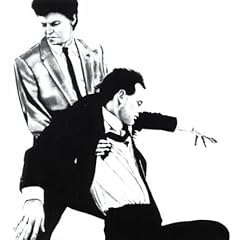
Glenn Branca - The Ascension
Friday, 8 February 2008
Bonnie 'Prince' Billy - I See a Darkness
 "Will Oldham, a.k.a. Bonnie 'Prince' Billy (born 24 December 1970 in Louisville, Kentucky), is an American singer, songwriter, and actor. Prior to adopting his current moniker, he performed and recorded under various permutations of the Palace name, including Palace Brothers, Palace Songs, and Palace Music (1993-1997). Will Oldham is known for his "do-it-yourself punk aesthetic and blunt honesty," and his music has been likened to Americana, folk, roots, country, punk, and indie rock, although Oldham is dissatisfied with these labels: "I don’t think it’s roots music, though it’s definitely influenced by Western popular music." He has been called an "Appalachian post-punk solipsist" and is notable for "his unique voice--a fragile sort-of warble frittering around haunted melodies in the American folk or country tradition."
AMG: "Bonnie "Prince" Billy's album I See a Darkness seems to pick up where Will Oldham's 1997 album Joya left off; a more melodic style than the veteran Palace listener might be used to. Oldham definitely hasn't abandoned his foundation of mordant lyrics and minimalist arrangements, but he has built a variety of different layers that make this album an emotional and pleasurable listening experience. In "Nomadic Revery," Oldham draws upon his classic Appalachian sound; it's the kind of song that begs you to join in. Oldham has always given the kind of energy to his character's voices that most people are afraid to relate to. This is all too evident in "Death to Everyone," Oldham punches out his bitter poetry in his most somber voice. The album takes its most surprising turn on "Madeleine-Mary," a Celtic-style folk song set to a Rastafarian guitar sound. "Today I Was an Evil One" introduces a horn section that drives home his morbid words in a strangely elegant manner. The album closes with a short and rare love song called "Raining in Darling"; Oldham stretches his voice to its most impressive limits, and the number is touching and hopeful." 5/5
Myspace: www.myspace.com/princebonniebilly
Download: http://www.mediafire.com/?fgqq0zdwxja
Sounds like... Smog, Songs: Ohia
Tags: Folk, Singer-Songwriter, Alt-Country
Wednesday, 6 February 2008
Polvo - Today's Active Lifestyles

"Polvo are an influential indie noise rock band of the 1990s from Chapel Hill, North Carolina, USA. The band was fronted by vocalist/guitarist Ash Bowie and guitarist Dave Brylawski. Eddie Watkins played drums, and Steve Popson played bass guitar. Polvo are considered one of the key proponents of a genre which came to be known as math rock. Their sound was defined by complex and dissonant guitar harmonies and driving rhythm, complementing Bowie's cryptic, often surrealist lyrics. So unpredictable and angular was their sound that the band's guitarists were often accused of failing to play with correctly-tuned guitars. Polvo's songs and artwork frequently featured Asian/"exotic" themes and references. The band's name means "dust" in Spanish; in Spain it also is a slang word for sex."
AMG: "Never a band to follow formulaic musical styles, Polvo once again shakes things up with its twisted song structures of multiple tempos and intricate, distorted guitars. Today's Active Lifestyles goes from the raucous "Thermal Treasure," with its tangled guitars, into the meandering "Lazy Comet," with its singsong, rhyming lyrics, to the spare, melancholy "My Kimono," which features a solo by guitarist Ash Bowie. And that's just the album's first three songs! The band experiments with several ideas throughout the album, and each concept is successful. The album ranges from cascading guitar solos in "Stinger (Five Wigs)" to the straightforward "Tilebreaker" to the catchy, rolling, keyboard-punctuated "Time Isn't on My Side." Overall, it's an excellent album with many layers. You can listen to it over and over again and still catch new things going on in every song." 4/5
Myspace: www.myspace.com/polvotheband
Download: http://www.mediafire.com/?8amyd3tyjm4
Sounds like... June of 44, Slint, Drive Like Jehu
Tags: Math Rock, Alternative, Experimental
Merzbow - Metamorphism
 "Merzbow (メルツバウ) is an extreme experimental music project created in Tokyo, Japan in 1979 under the direction of musician Masami Akita (秋田昌美) and is recognized as being one of the earliest projects in what has become known as the 'Japanese noise scene'. Highly prolific, Merzbow has released over 300 CDs, LPs and cassettes since 1979."
AMG: "There is no need to argue: Merzbow stands as the most important artist in noise music. The favorite moniker of Japanese Masami Akita appears on hundreds of albums. The name comes from German artist Kurt Schwitters' famous work "Merzbau," which he also called "The Cathedral of Erotic Misery." Akita's choice reflects his fondness for junk art (through Schwitters' collage method) and his fascination with ritualized eroticism, namely in the form of fetishism and bondage. All these elements constitute the Merzbow persona. Akita was born in Tokyo in 1956. He grew up with psychedelic rock and began to play the guitar in progressive rock cover bands, in particular with drummer Kiyoshi Mizutani, who would remain a frequent collaborator. After high school, Akita studied literature and visual arts in college. There he discovered free jazz and studied seriously the ideas of Dada and the surrealists (Salvador Dali remained a big influence). Akita gradually withdrew himself from the rock scene and began experimenting in his basement with broken tape recorders and feedback."
Metamorphism was limited to 1000 copies with the first 500 being packaged in a heavy duty marble box. Metamorphism is a powerfully emotional, violently painful, and strangely ambient work. Fused from deep and loud pulses, Merzbow proceeds to wrap all sorts of whistling and buzzing, some abstract guitar strumming and chaotic sheets of static and ear-splitting metallic scrapes over the carefully constructed rhythm. 3/5
Myspace: www.myspace.com/merzbow
Download: http://www.badongo.com/file/7670485
Sounds like... Masonna, Goverment Alpha
Tags: Noise, Experimental
Chapterhouse - Whirlpool
 "Five rail-thin longhairs from Reading, England, Chapterhouse was first linked to the space rock likes of Spacemen 3 and Loop — the connection with the former being inextricable during the band's youngest months, thanks in part to vocal support from Sonic Boom. Early on, the two bands also shared the same management and gigged together. As the years transpired, Chapterhouse would eventually be identified as a shoegaze band, thrown in with the so-called "Scene That Celebrates Itself ". Chapterhouse could switch from bliss to dread in an instant, with steady downpours of guitars and buried vocals that were either phased into haunting drones or ecstatic rushes of melodic noise."